Rising 3,357 metres above the Sicilian coastline, Mount Etna has been shaping civilisations, inspiring myths, and rewriting the landscape for half a million years. From ancient Greek gods to modern UNESCO recognition, this restless giant holds secrets that no other mountain on Earth can claim.
Mount Etna's story begins approximately 500,000 years ago, when volcanic activity beneath what is now the Ionian Sea began building the foundations of Europe's tallest active volcano. Early eruptions occurred underwater along the coastline of eastern Sicily, gradually accumulating vast quantities of basaltic lava. Around 300,000 years ago, the activity migrated inland, and the volcanic centre shifted toward its present location near the city of Catania. These ancient undersea eruptions left behind distinctive hyaloclastite formations — glassy volcanic rock created when hot magma meets cold seawater — still visible in the geological record today, offering geologists a remarkable window into Etna's fiery birth.
As millennia passed, Etna evolved through several distinct volcanic phases, each building upon the last to create the complex, layered stratovolcano that dominates Sicily's skyline today. Between 170,000 and 100,000 years ago, an ancient shield volcano known as the Ellittico caldera dominated the summit area before collapsing spectacularly around 14,000 BCE. This collapse created a vast crater that was subsequently filled and built over by continued eruptions. The current central cone, known as the Mongibello, has been growing actively for approximately 35,000 years. This layered geological history means Etna is not a single volcano in the traditional sense, but rather a volcanic complex built from centuries of overlapping activity.
No mountain in the ancient world fired the human imagination quite like Etna. The ancient Greeks, who colonised Sicily from the eighth century BCE, wove the volcano directly into their mythology. Etna was believed to be the forge of Hephaestus, the god of fire and craftsmanship, where Cyclopes hammered out thunderbolts for Zeus beneath the mountain. The poet Pindar wrote vividly about Etna's eruptions as early as 475 BCE, describing pillars of fire pouring from its summit. The philosopher Empedocles, born in nearby Akragas around 490 BCE, was said to have leapt into Etna's crater in pursuit of immortality — a legend that endures to this day.
The Romans inherited Greek fascination with Etna and added their own mythology to the mountain's legend. Virgil referenced Etna in the Aeneid, describing it as the prison of the Titan Enceladus, whose writhing beneath the mountain caused its eruptions and earthquakes. Roman writers including Lucretius and Strabo attempted more scientific descriptions of volcanic activity, making Etna one of the first volcanoes to be studied with any degree of analytical curiosity. The mountain also had practical military significance: in 425 BCE, the historian Thucydides recorded one of Etna's earliest documented eruptions, which reportedly halted a Carthaginian military advance across Sicily, demonstrating the volcano's role as an inadvertent guardian of the island.
Through the medieval period, Etna remained a central feature of Sicilian identity under successive waves of Arab, Norman, and Spanish rule. Arab geographers of the ninth and tenth centuries documented the volcano with remarkable precision, and the Norman king Roger II incorporated Etna into the cultural landscape of his cosmopolitan Sicilian kingdom. Local communities developed an intimate, often fatalistic relationship with the mountain, building towns like Nicolosi and Zafferana Etnea on its fertile lower slopes despite the ever-present volcanic risk. The rich volcanic soils produced exceptional harvests of pistachios, almonds, citrus fruits, and wine grapes — a bounty that made living in Etna's shadow not just bearable, but deeply desirable across the centuries.
Of all Etna's recorded eruptions — numbering well over 200 in documented history — none was more catastrophic than the great eruption of 1669. Beginning in March of that year, a massive fissure opened on the southern flank of the volcano, unleashing lava flows that advanced relentlessly toward the coast. The eruption lasted 122 days, destroyed the town of Nicolosi, and overwhelmed the western walls of Catania, killing an estimated 20,000 people and burying entire villages under metres of hardened lava. The disaster reshaped the Catanian coastline permanently, extending it several hundred metres into the sea. Yet remarkably, the communities of eastern Sicily rebuilt, demonstrating the extraordinary resilience that has defined Etna's human story for millennia.
The nineteenth and twentieth centuries brought a new kind of attention to Etna: scientific scrutiny. The Osservatorio Etneo, established in 1879 on the southern flank at an elevation of 2,940 metres, became one of the world's earliest dedicated volcanological monitoring stations. This institution laid the groundwork for modern understanding of basaltic shield eruptions. Major eruptions in 1928, which destroyed the coastal town of Mascali, and the prolonged 1991 to 1993 eruption, which threatened Zafferana Etnea, both prompted significant civil engineering responses, including experimental lava diversion barriers. These events accelerated international scientific collaboration and established Etna as one of the most closely monitored volcanoes on Earth.
In June 2013, UNESCO inscribed Mount Etna on its World Heritage List, formally recognising what locals had always known: that this volcano possesses outstanding universal value. The designation acknowledged Etna's exceptional geological significance, its record of continuous eruptive activity spanning hundreds of thousands of years, and its profound influence on science, culture, and mythology. UNESCO specifically highlighted Etna's accessibility and visibility as a natural laboratory for volcanological research. This recognition accelerated sustainable tourism development across the Etna region, encouraging investment in guided trekking infrastructure, the Circumetnea narrow-gauge railway, and a network of rifugi — mountain refuges — that make the volcano safely accessible to visitors of all abilities.
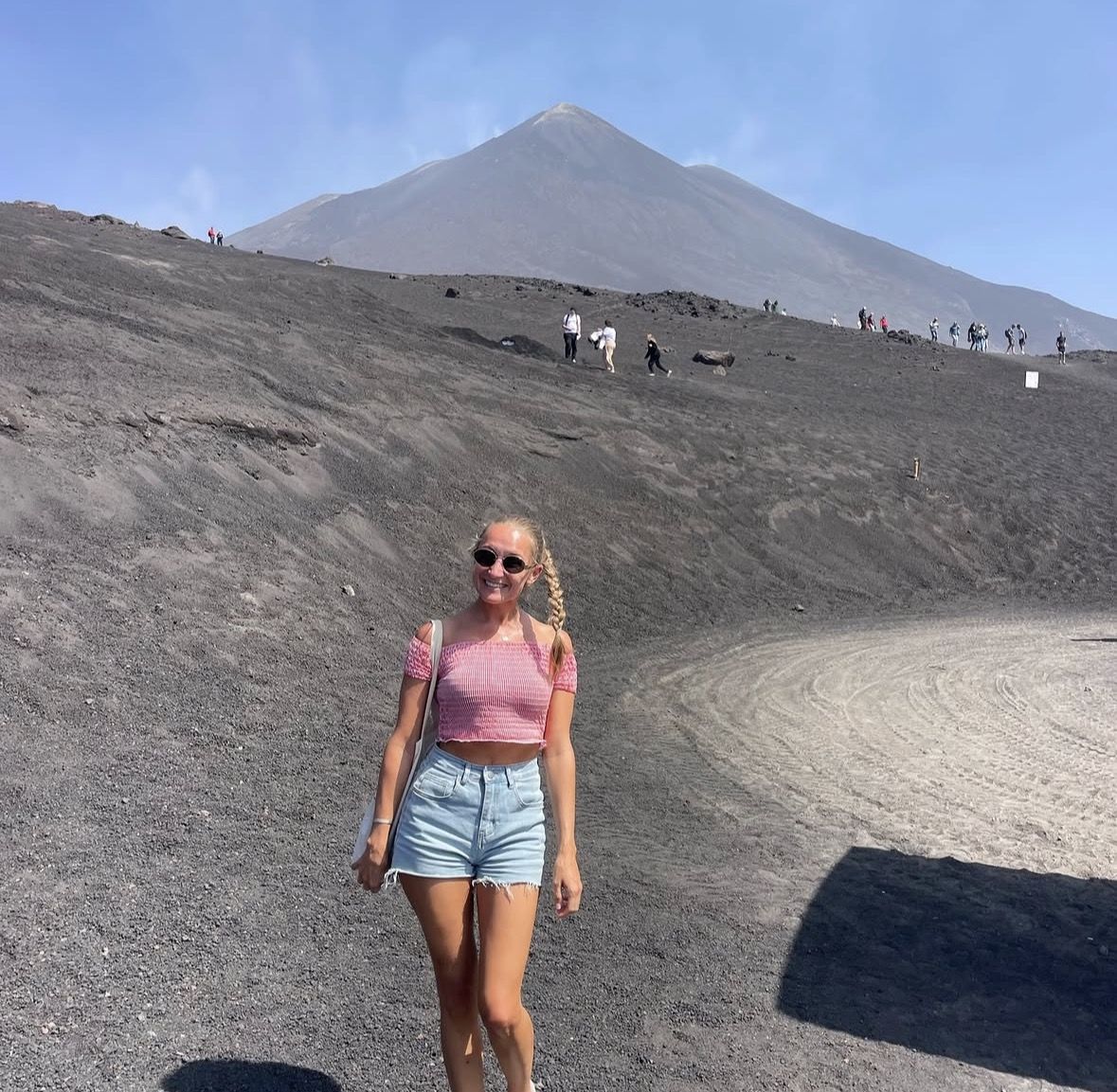
Modern Etna is as active and unpredictable as ever, erupting with notable events in 2001, 2002, 2008, and with particular intensity throughout 2021 and 2022, when dramatic lava fountains reaching heights of several kilometres were broadcast live around the world. Today, the Etna Park — the Parco dell'Etna, established in 1987 — protects 59,000 hectares of volcanic landscape encompassing ancient lava fields, endemic flora, beech forests, and high-altitude desert terrain. Visitors can explore four distinct altitude zones, from the lush citrus groves of the lower slopes to the stark, otherworldly summit craters, riding the Funivia dell'Etna cable car and joining guided treks to the Valle del Bove, a vast horseshoe-shaped depression formed by an ancient collapse.
Whether you are drawn by the mythology of the gods, the drama of living geology, the extraordinary flavours of Etna's volcanic wines and pistachios, or simply the desire to stand at the summit of Europe's most magnificent active volcano, Etna rewards every kind of traveller. Sunrise from the summit crater rim, with the shadow of the volcano stretching westward across Sicily and the Aeolian Islands visible on the horizon, is an experience that stays with visitors for a lifetime. The mountain has been inspiring wonder for half a million years — and it shows no signs of quieting down. There has never been a better or safer time to answer its call and witness this extraordinary piece of living Earth history for yourself.
Ready to Experience It Yourself?
From expert-guided summit treks and cable car rides to wine tastings on volcanic slopes, the best Etna tours sell out fast — especially in summer. Browse our hand-picked selection of fully guided Mount Etna experiences and secure your spot on Europe's most awe-inspiring volcano. Your adventure on Sicily's fire mountain is just one click away.
Book Your Tour Now